
May 2026 saw an unusually high number of hot days
Preliminary climate report from GeoSphere Austria: A hot and dry May saw 46 weather stations across Austria set new records for the number of hot days. And although there were certainly some areas that received heavy rainfall, the average precipitation across the country was a third lower.
When temperatures climb to 30 degrees or more in some places in May, that is not unusual in itself. What was unusual in May 2026, however, was the frequency of hot days. New records were set at a total of 46 GeoSphere Austria monitoring stations. Lienz in East Tyrol led the way. On 26 May, a temperature of 33.3 degrees not only set a new record there. The previous May record for the number of hot days, set in 2001 at three, was also smashed, with eight days reaching at least 30 degrees. The widespread increase was also striking: in both Bregenz and Eisenstadt, the previous record for the number of hot days in May was exceeded.
Spring_2026_Temp_compare_91-20.png
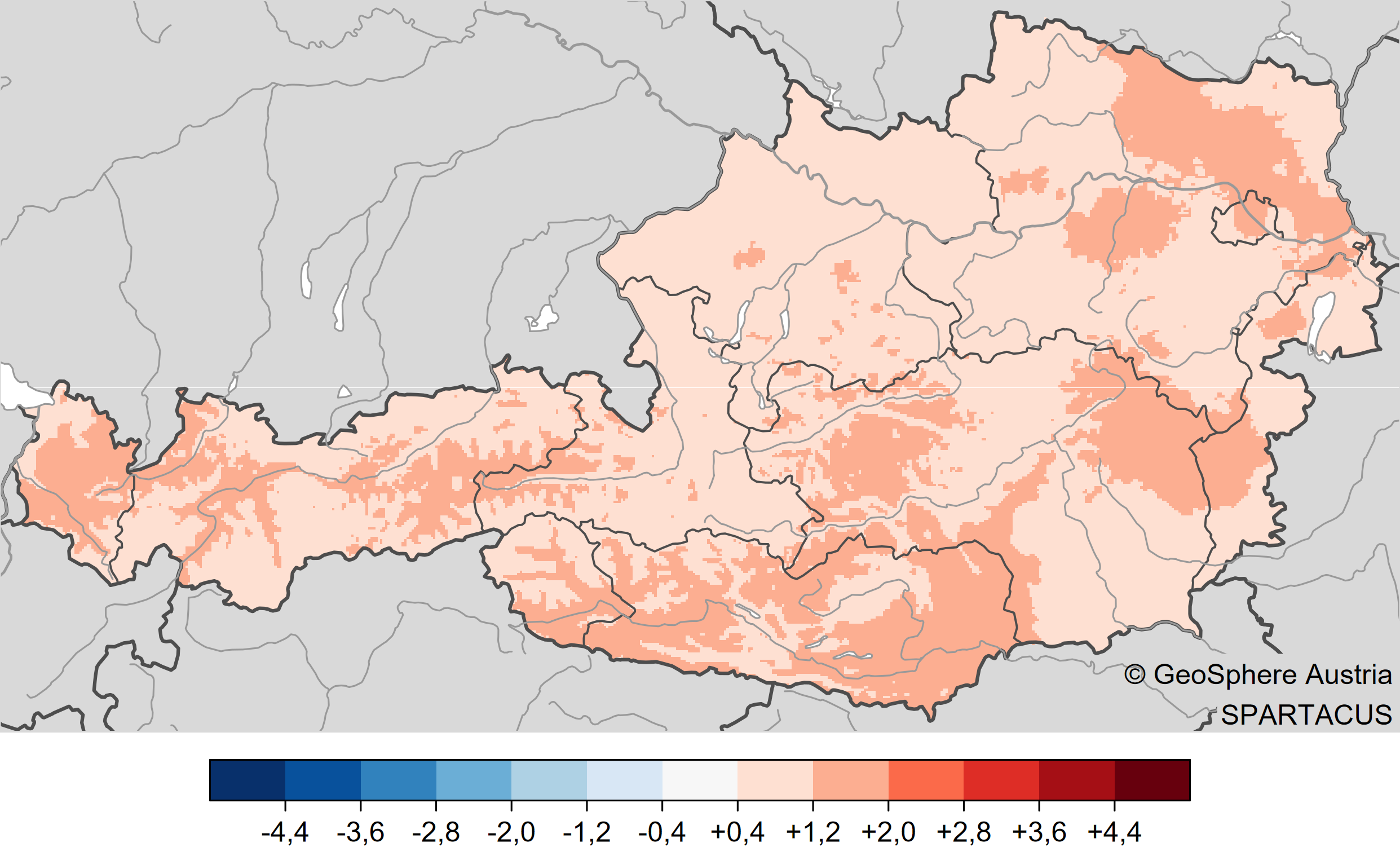
Temperature in spring 2026: deviation from the 1991–2020 average. Analysis based on SPARTACUS data up to and including 26 February 2026. © GeoSphere Austria.
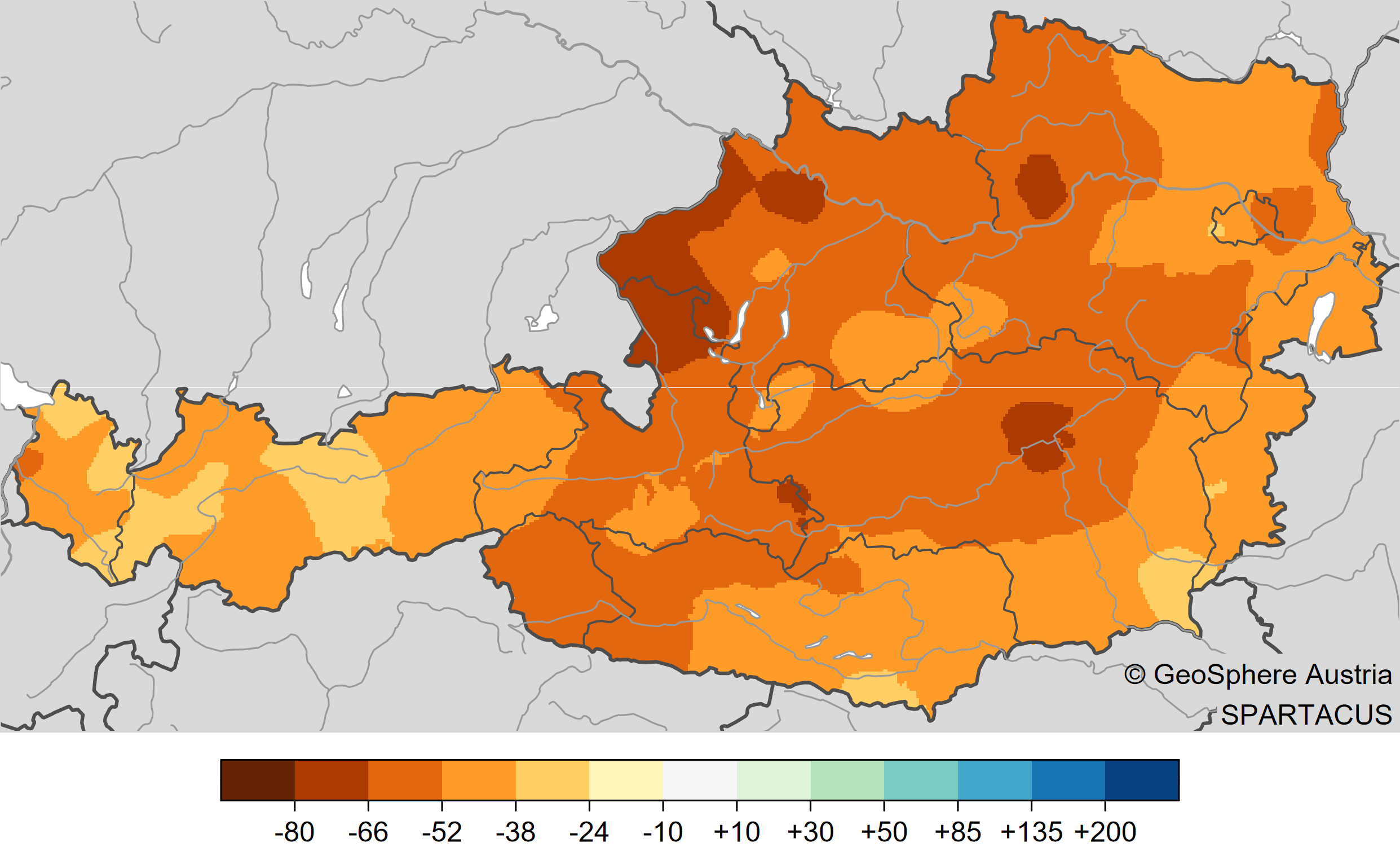
Following two extremely dry months in March and April, May also saw significantly below-average rainfall. Normal rainfall levels or only slight deficits were recorded only in Lower Carinthia, Western and Eastern Styria, and Southern Burgenland. Conditions remained very dry in Flachgau, the Innviertel, the Vienna Basin and Northern Burgenland. In these regions, rainfall was between half and two-thirds lower than the long-term average for 1991 to 2020.
Spring_2026_precipitation_compare_91-20.png
Precipitation in spring 2026: Deviation of precipitation from the average compared to the 1991–2020 average. Analysis using SPARTACUS data up to and including 26 February 2026. © GeoSphere Austria.
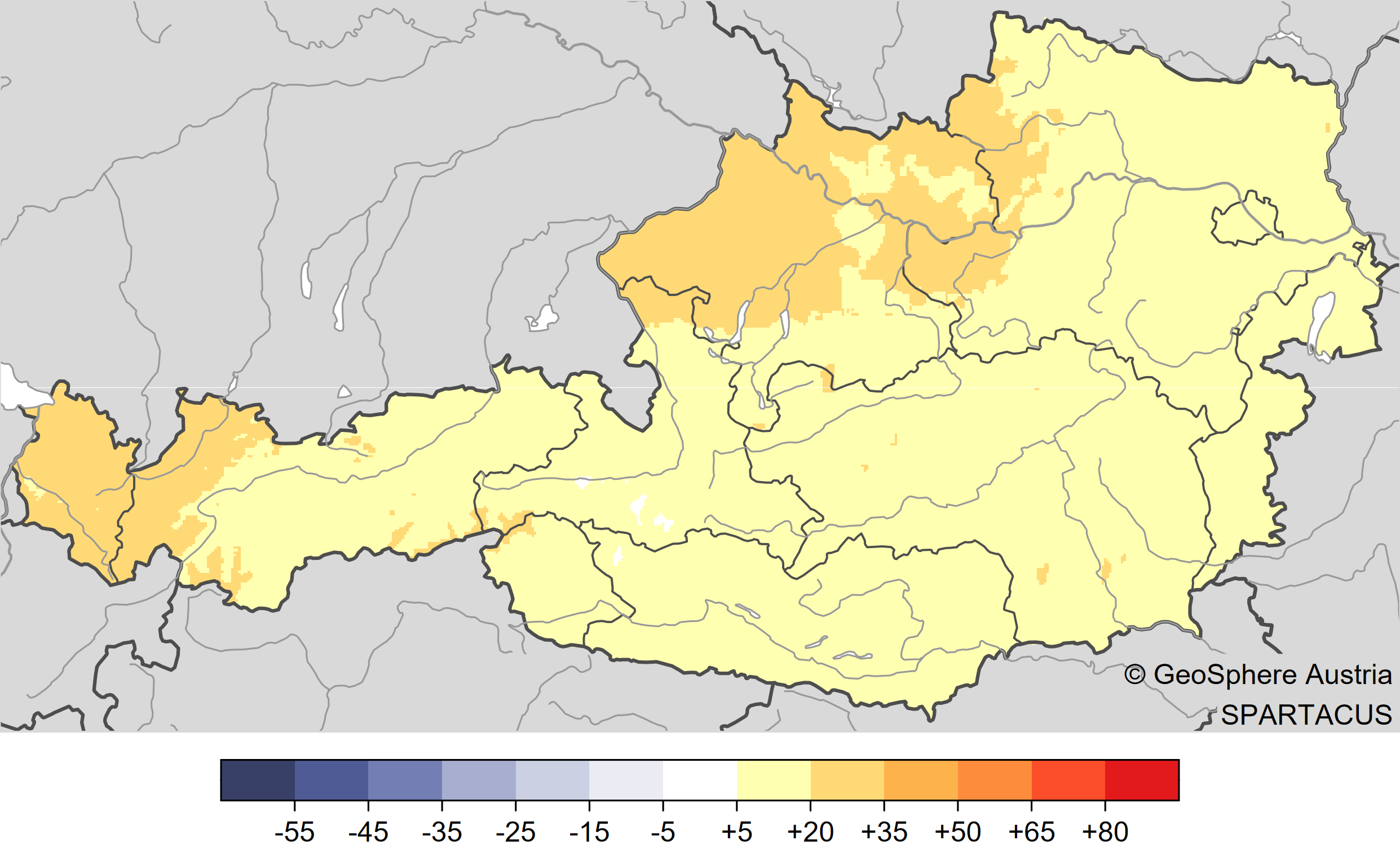
May has not been this sunny since 2011. Nationwide, 26 per cent more hours of sunshine were recorded than the climate average for 1991 to 2020. In May 2011, the sunniest on record, the figure was 34 per cent. May 2026 ranked fifth in this category. Particularly high deviations were observed in Vorarlberg, in Tyrol north of the Inn and at higher altitudes, in Salzburg north of the Salzach, in Upper Austria, in western Lower Austria and in large parts of Styria. In these regions, the anomalies reached 25 to 50 per cent.
Spring_2026_sun_compare_91-20.png
Sunshine duration in spring 2026: Deviation of sunshine duration compared to the 1991–2020 average. Analysis using SPARTACUS data up to and including 26 February 2026. © GeoSphere Austria.
The average start of flowering for black elder in 2026 was six days earlier than the average for 1991 to 2020. This placed it seventh in the 93-year observation series of flowering start dates for black elder. Common bent grass and black locust also began to flower earlier.
Translated with DeepL.com (free version)