
Replica of an 18-million-year-old dolphin skull on display
An extraordinary fossil discovery made in 2020 near Vöcklabruck in Upper Austria caused quite a stir back in 2020.
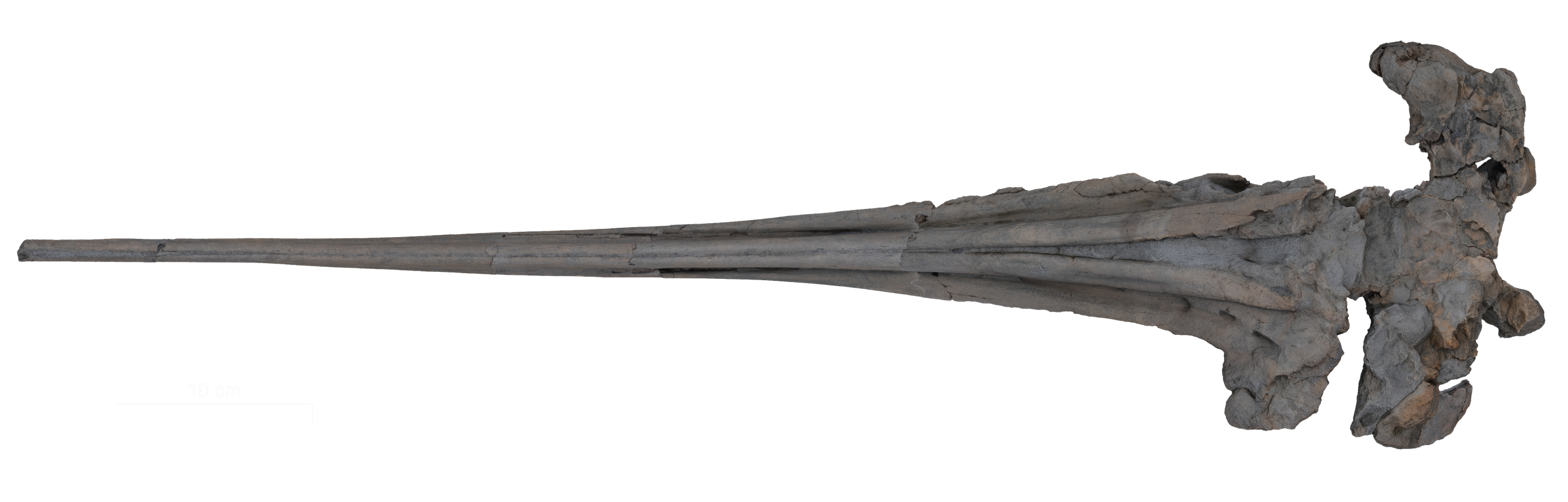
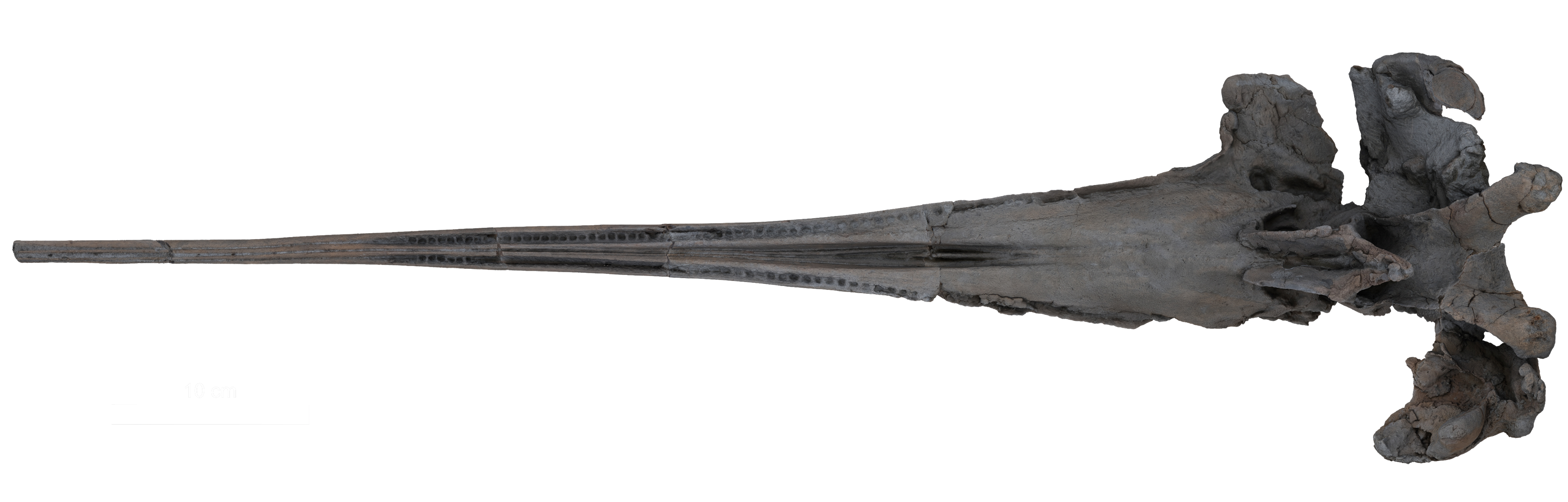
Over the past few years, scientists have been examining this dolphin skull from the Miocene epoch, which is around 80 centimetres long and approximately 18 million years old. What is particularly remarkable is that the find dates from a time when large parts of what is now Austria were covered by the outlying waters of the so-called Paratethys, a prehistoric sea. The skull exhibits characteristics of the extinct dolphin family Eurhinodelphinidae, which was known for its unusually long snouts. According to palaeontologist Prof. Dr Pavel Gol’din of the National Academy of Sciences of Ukraine, this could be the first definitive evidence of this group of animals in Austria, the Northern Alpine foreland basin and possibly even the entire Paratethys.
Dolphin_locality.png
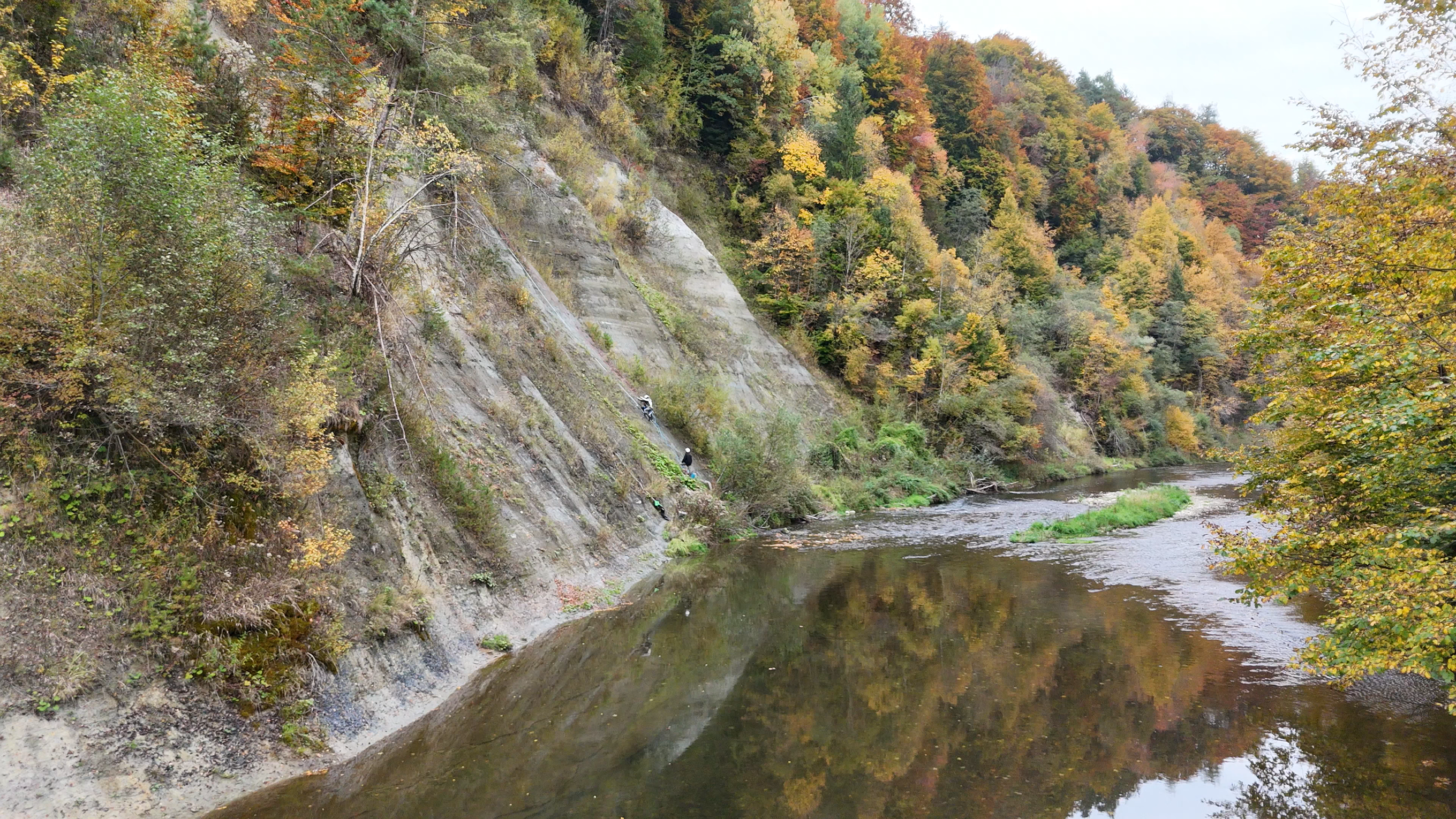
Site where the fossilised dolphin skull was found on the Vöckla. © GeoSphere Austria/Kettler.
Modern 3D analyses and new geological investigations have helped to determine the age and origin of the fossil more precisely. The find provides valuable insights into the evolution of early toothed whales and the living conditions in the primeval ocean of that time. At the same time, it shows that the diversity of fossil marine mammals in Austria has been significantly underestimated until now. The discovery underlines the international significance of Upper Austria’s fossil sites for research into the evolution of whales and dolphins.
Dolphin_3D_upper jaw_dorsal.png
3D model of the dolphin skull – dorsal view of the upper jaw. © GeoSphere Austria/Kettler.
Dolphin_3D_upper jaw_ventral.png
3D model of the dolphin skull – underside (ventral) of the upper jaw. © GeoSphere Austria/Kettler.
As part of the exhibition opening on 19 November, the latest geoscientific research into the extraordinary fossilised dolphin skull from Upper Austria – which offers us new insights into the Miocene environment – was combined with artistic interpretations. In a series of presentations, Hans-Georg Krenmayr (GeoSphere Austria) spoke about the history of the discovery, the preparation of the specimen and the sedimentary facies of the site; Martin Studeny (Upper Austrian Provincial Museum) discussed the preparation of the specimen; and the discoverer, Felix Hofmayer, spoke about the biostratigraphy, palaeoecology and the 3D model that had been created. Following the presentations, the dancer Andrea Nagl explored the theme artistically, translating geological processes into movement. Her performance recounted the formation of the Alps and the Molasse Basin, covering tidal currents, shifting sand bodies and the deposition of silt, right through to the life of a dolphin in the Miocene sea. With the animal’s death, another transformation began – decay, embedding in sediment, fossilisation and the formation of the concretion that would be discovered by geologists millions of years later.
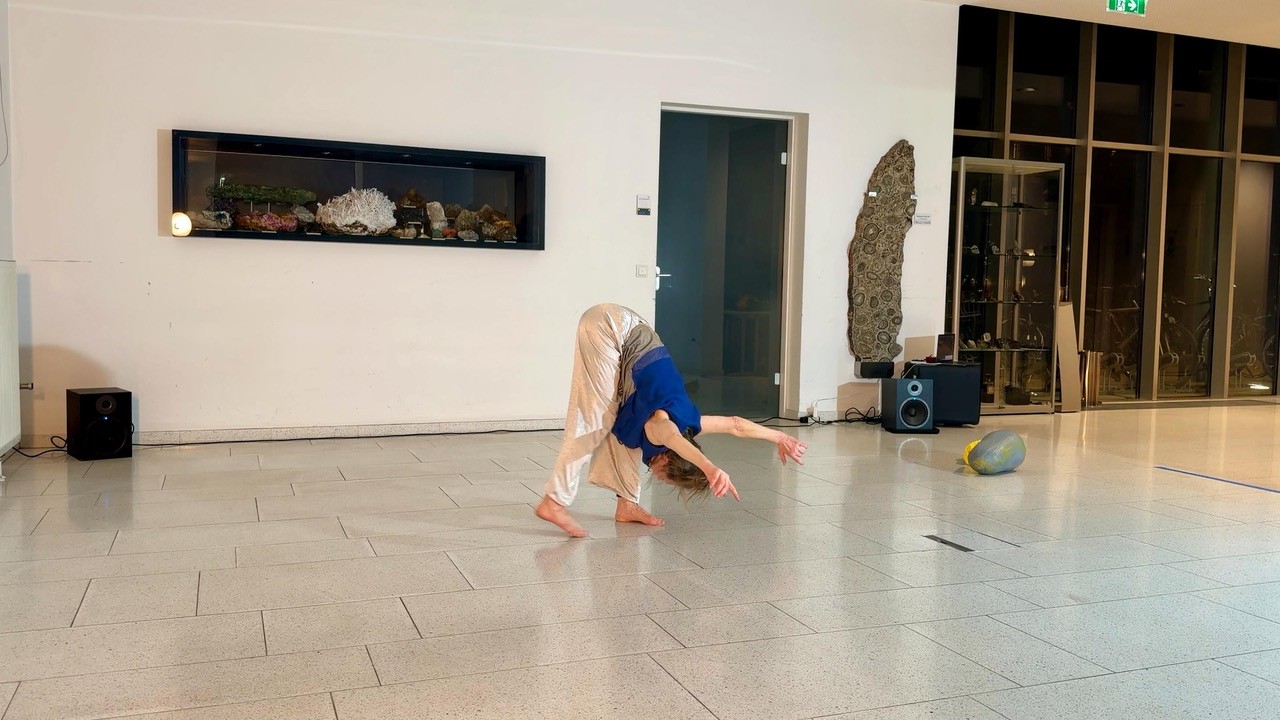
Scene from the dance performance Dance performance by Andrea Nagl at the opening of the special exhibition on fossilised dolphin skulls. © nagl~wintersberger.
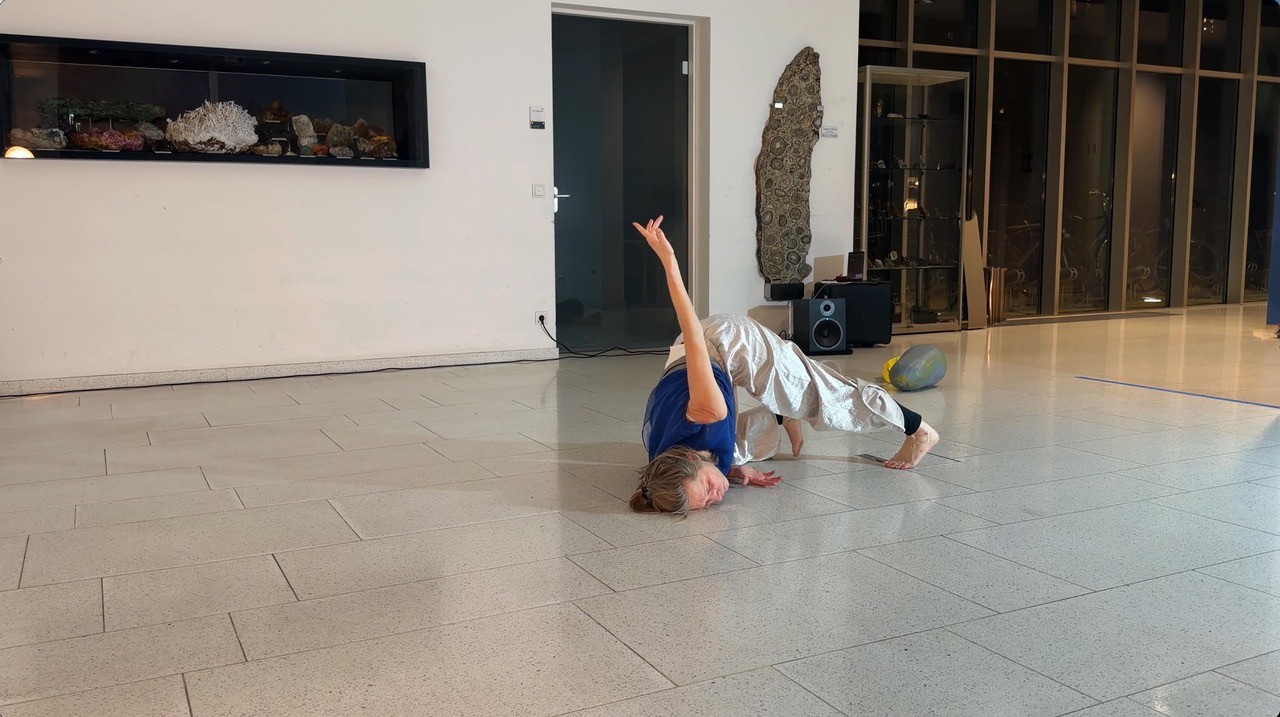
Scene from the dance performance Dance performance by Andrea Nagl at the opening of the special exhibition on fossilised dolphin skulls. © nagl~wintersberger.
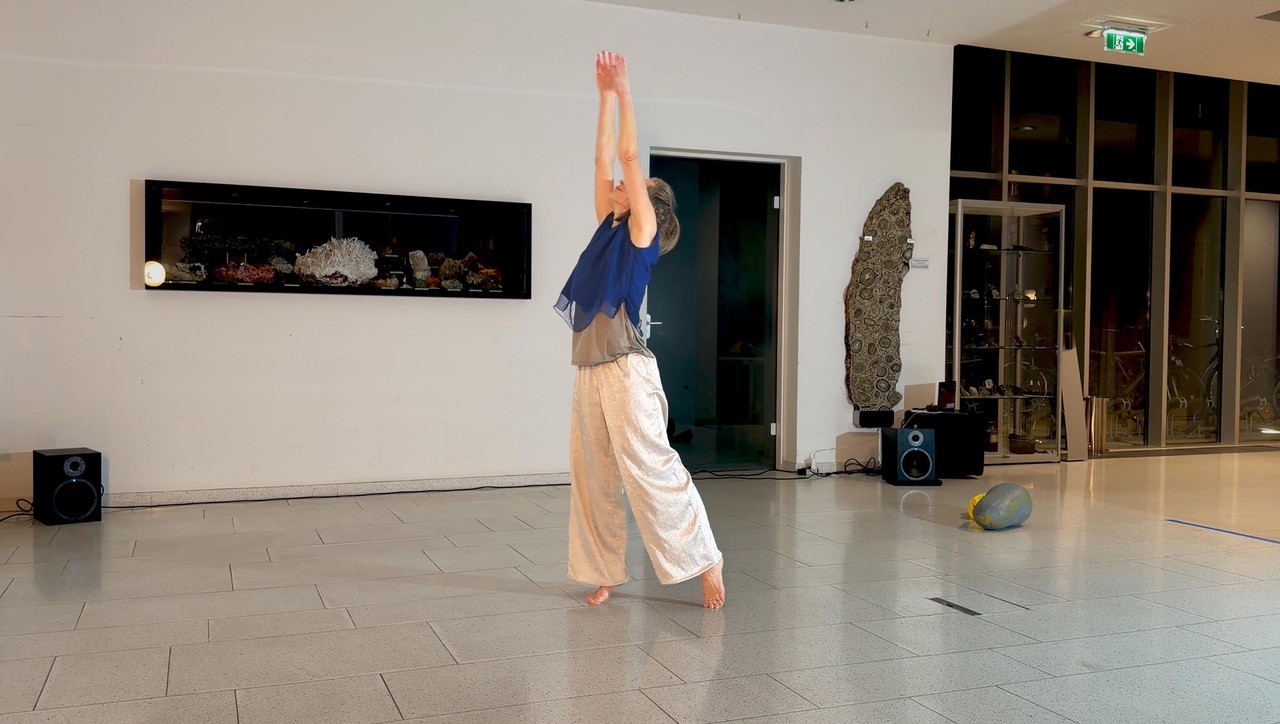
Scene from the dance performance Dance performance by Andrea Nagl at the opening of the special exhibition on fossilised dolphin skulls. © nagl~wintersberger.
A 3D replica of the dolphin skull is now on public display in the shop window of GeoSphere Austria at Neulinggasse 38, 1030 Vienna, until early 2026.
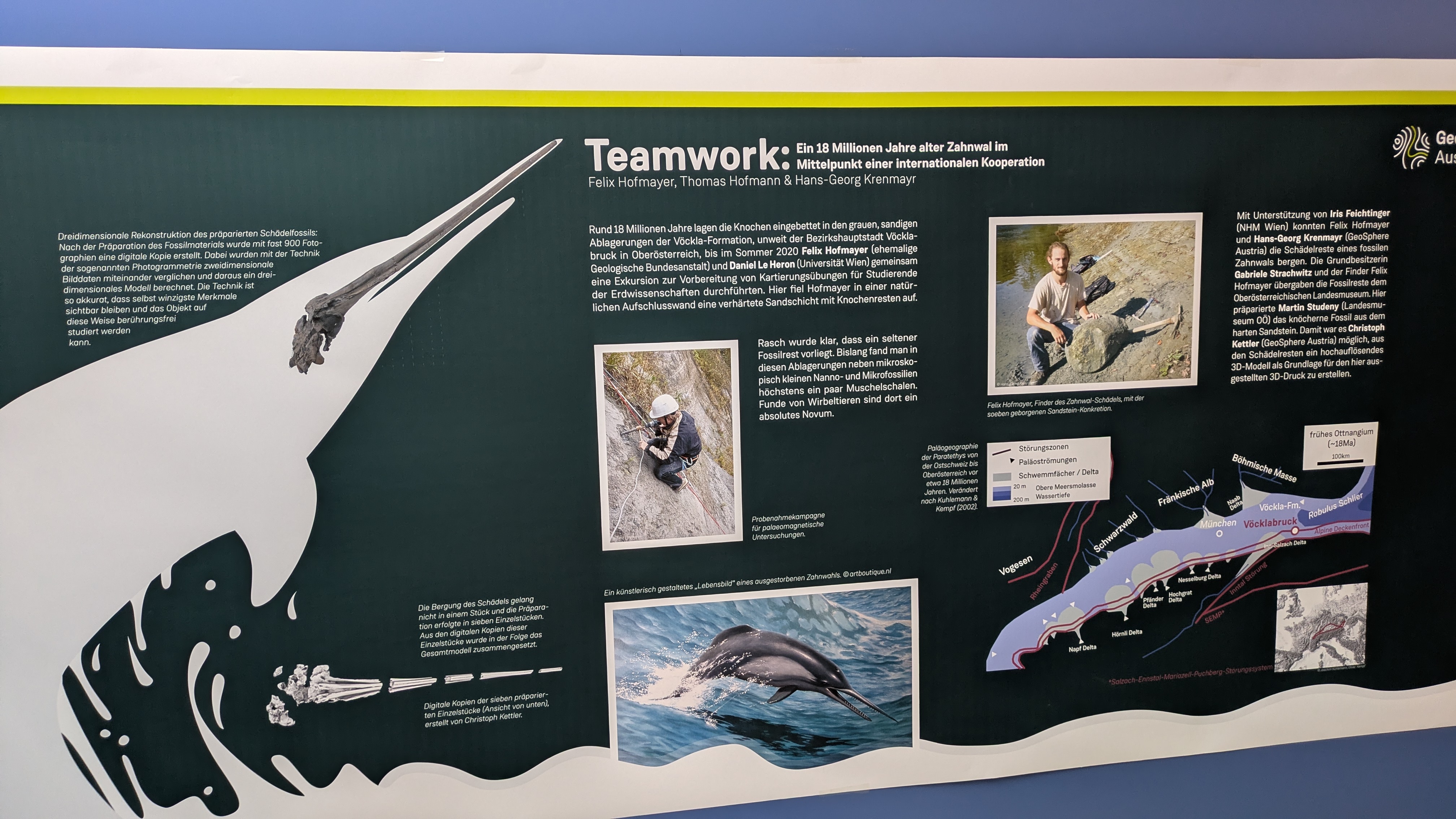
Dolphin_exhibition panel.jpg
Part of the special exhibition on fossilised dolphin skulls. © GeoSphere Austria/Janda.
Translated with DeepL.com (free version)