
High-profile international accolade for the geoscience collections
In 2026, GeoSphere Austria’s geoscience collections were officially recognised as an ‘IUGS Geo-Collection’ by the International Union of Geological Sciences (IUGS). This prestigious recognition underscores the global scientific, historical and cultural value of the heritage, which documents over 1.4 billion years of Earth’s history.
GeoSphere Austria manages one of the country’s most significant palaeontological collections, comprising some 160,000 records and over a million individual fossils, including 26,000 scientifically documented specimens. Dating back to 1835, the collections represent almost two centuries of research in Central Europe. Among the objects are unique originals that served as the basis for the first descriptions of new species, as well as historically significant finds from scientific publications that act as cornerstones of palaeontological research at both national and international levels. The collections thus form a reference archive with a history spanning almost two hundred years.
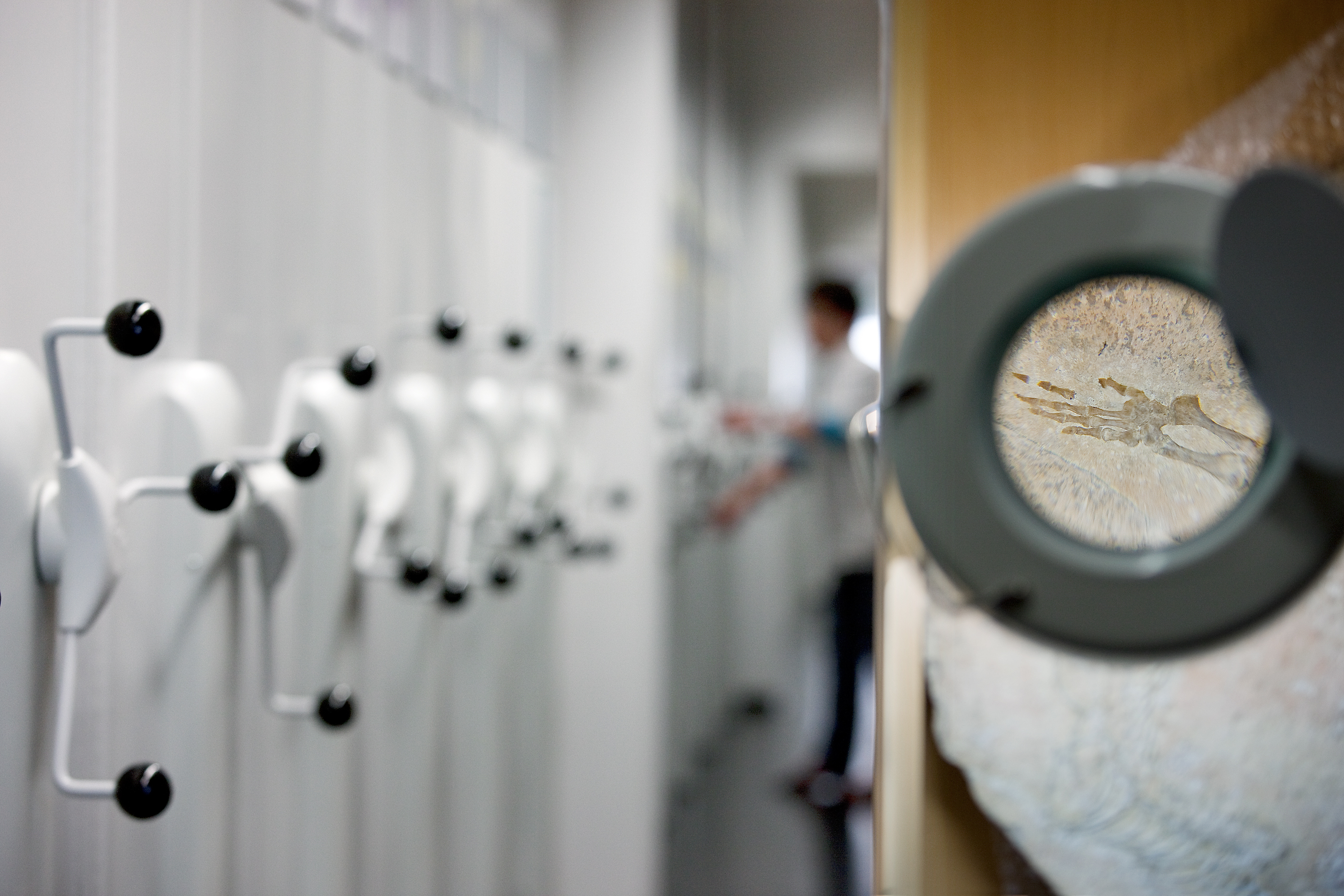
IUGS_geocollection_lammerhuber.jpg
An insight into the palaeozoological collection of GeoSphere Austria. © Lammerhuber.
This international recognition places the GeoSphere Austria collections within a leading global network. As a partner of UNESCO, the IUGS complements its conservation measures on a global scale. Whilst UNESCO focuses on outdoor sites and geoparks, the IUGS – the highest scientific authority in the geosciences – has established the ‘IUGS Geo-Collection’ status to certify the excellence of geological heritage held in major archives and research institutes. This title confers upon the Institute’s collections the same scientific weight and international standing as the renowned UNESCO designations and officially recognises them as a strategically important heritage for humanity.
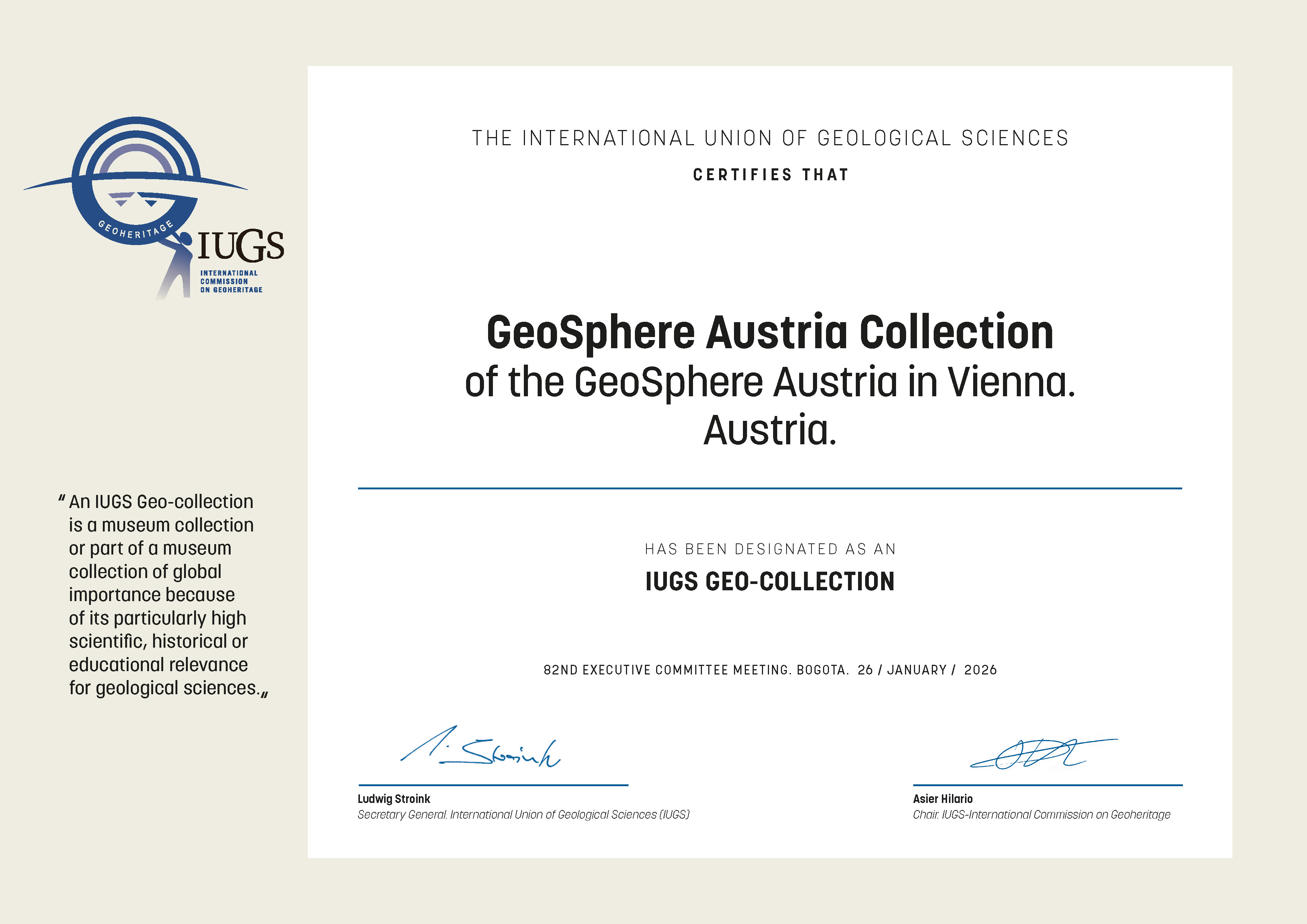
GeoSphere Austria Collection_certificate.jpg
IUGS certificate recognising the GeoSphere Austria collections as an IUGS Geo-collection. © IUGS/GeoSphere Austria.
The historical specimens, which were studied by pioneers of the discipline such as Alcide d’Orbigny, Franz von Hauer, Rudolph Hörnes and Melchior Neumayr, document the roots of palaeontology and geology in Central Europe. Today, these specimens are indispensable for modern climate change research, for stratigraphic models and for geological mapping to support political and industrial decision-making.
The GeoSphere Austria collections are accessible to scientists, researchers and students for consultation and study purposes during opening hours. However, as this is a scientific research archive, an appointment must be made. ‘This designation confirms the global significance of our collection and will open up new, crucial opportunities for collaboration with scientists and institutions around the world,’ says Davide Di Franco, curator of the palaeozoological collection at GeoSphere Austria. ‘This milestone will also give a significant boost to our digitisation efforts.’
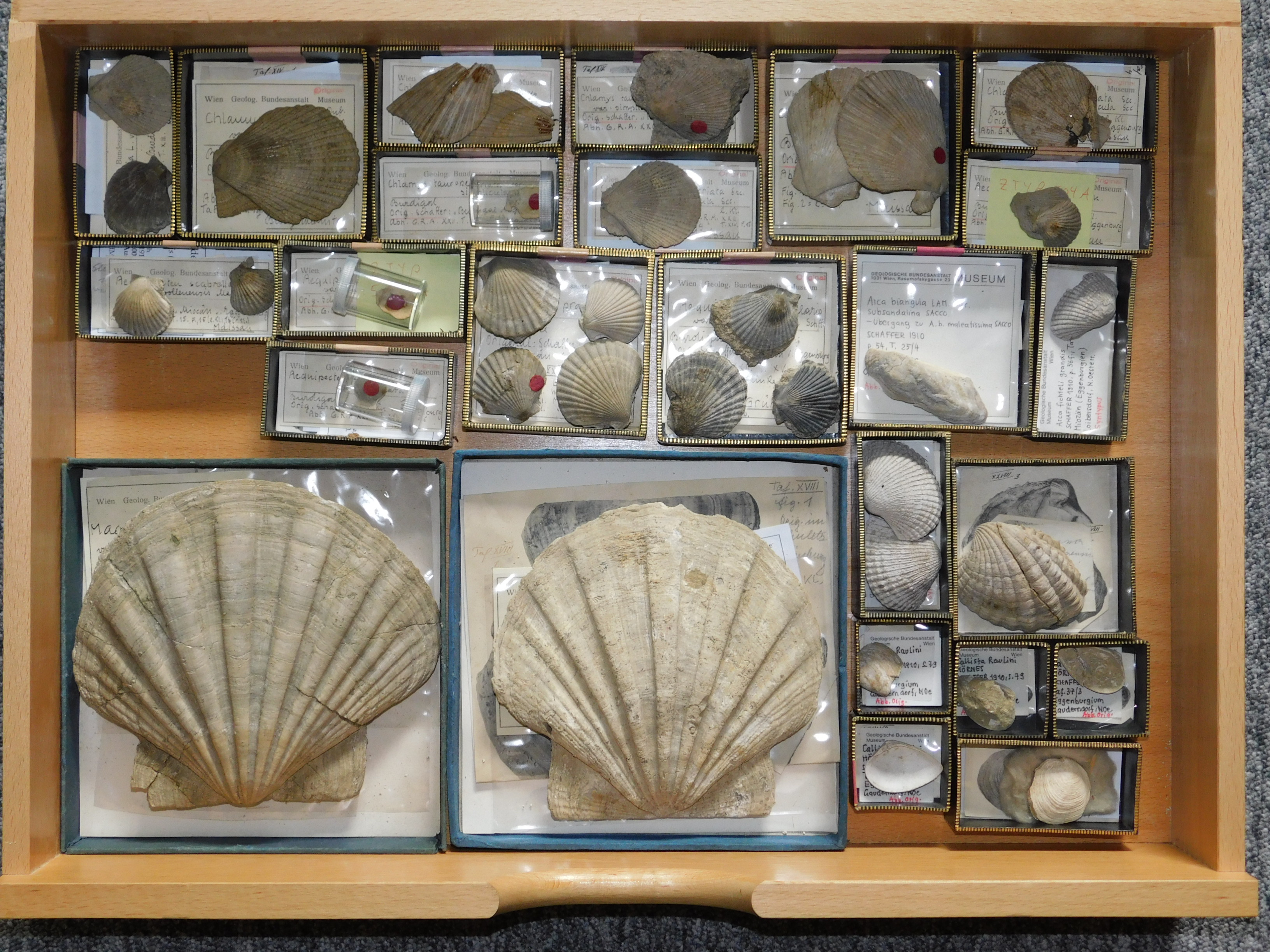
IUGS_geocollection_tray.jpg
A tray from the palaeontological collection of GeoSphere Austria containing bivalves (mussels) from Eggenburg in Lower Austria, dating from the Miocene, approximately 20 million years ago. © GeoSphere Austria.
‘Our fossilised plant remains – from leaf impressions and fossilised wood to pollen and spores – tell the story of past climate zones, changes in vegetation and ecosystems across geological time scales,’ emphasises Daniela Festi, curator of the palaeobotanical collection. ‘Particularly in times of global climate change, these archives are taking on a new, highly topical significance: They provide us with valuable comparative data to understand past climate changes and draw conclusions for the future.’
Translated with DeepL.com (free version)