
Climate review: Autumn 2026 – even a snowy end to the season cannot alleviate the prolonged drought in Austria
Autumn 2026 began with extremely hot weather, then settled at slightly above-average temperatures, before ending with a cold snap. Despite heavy snowfall at the end of November, the autumn precipitation balance remained virtually unchanged. Measurement data from GeoSphere Austria confirm that, with a nationwide deficit of 27 per cent, the prolonged drought in Austria continued throughout the autumn.
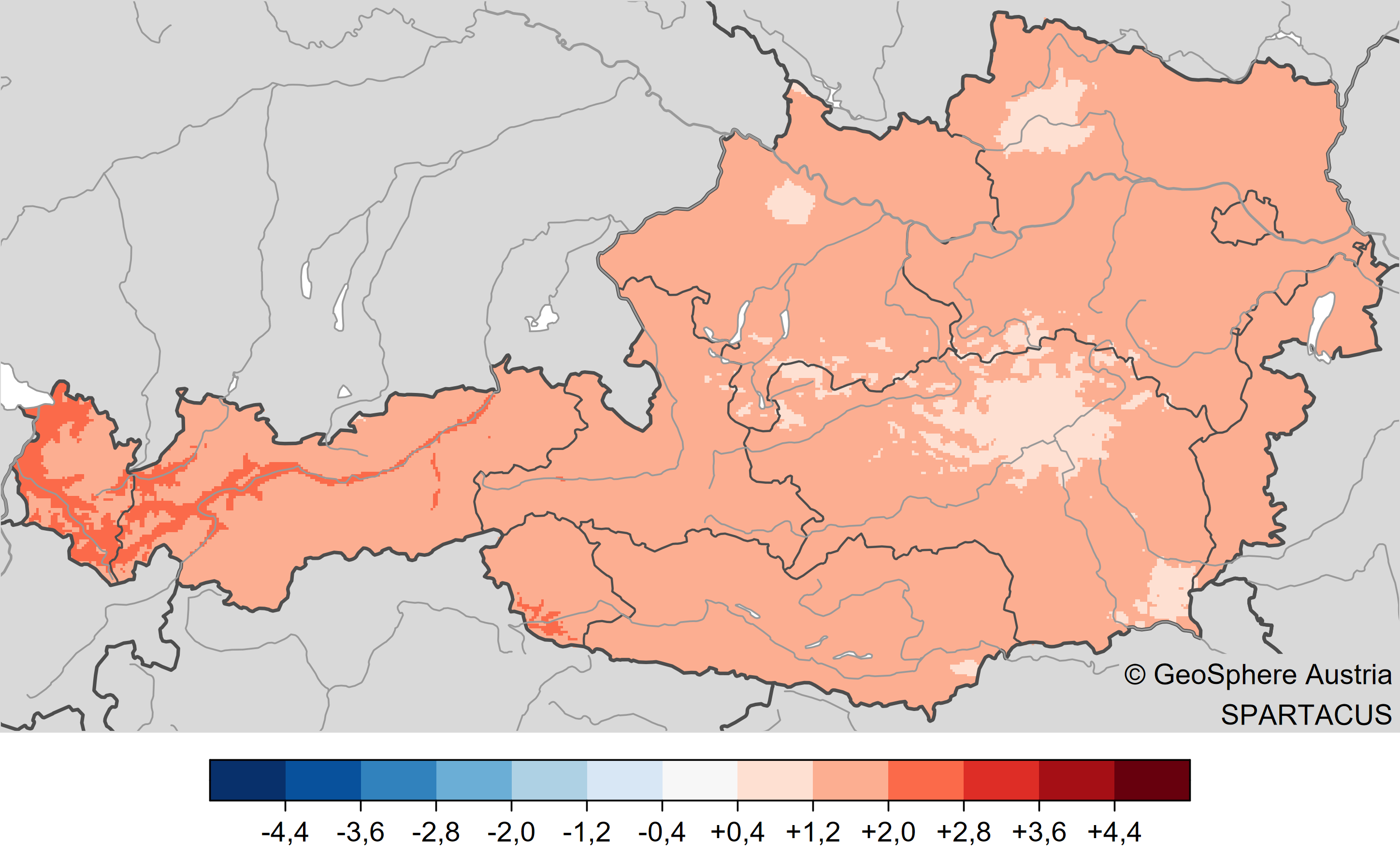
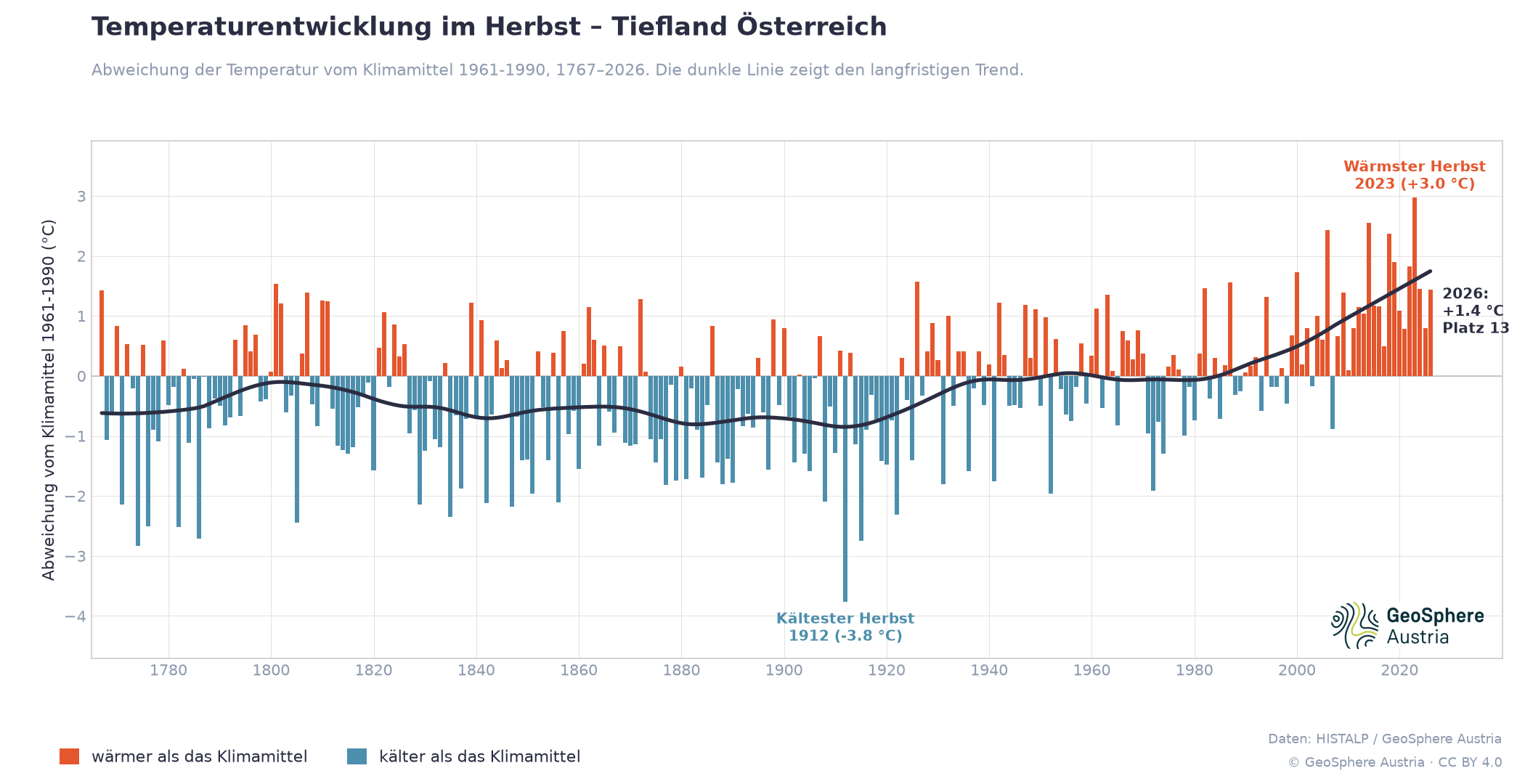
At the start of September, there was still no sign of autumn: temperatures were up to seven degrees above the long-term average. In many places, thermometers showed readings well above 30 degrees. In Pottschach (Lower Austria), the temperature reached 34.7 degrees on 8 September. It then became cooler, though temperatures remained above average. It was not until the last week of November that a cold snap, including snowfall, occurred – particularly in southern and eastern Austria. The lowest temperature recorded to date in an inhabited settlement was minus 13.9 degrees in St. Leonhard im Pitztal (T). ‘In summary, this results in a temperature anomaly for the whole of autumn of 0.7 degrees compared with the 1991–2020 climate average and 1.4 degrees compared with the 1961–1990 climate average,’ explains climatologist Alexander Orlik of GeoSphere Austria. ‘This makes it the thirteenth warmest autumn in Austria’s temperature time series, which now spans 260 years.’
Autumn2026_Temp_1961-1990.png
Temperature trends in autumn 2026 compared with the 1961–1990 long-term average © GeoSphere Austria.
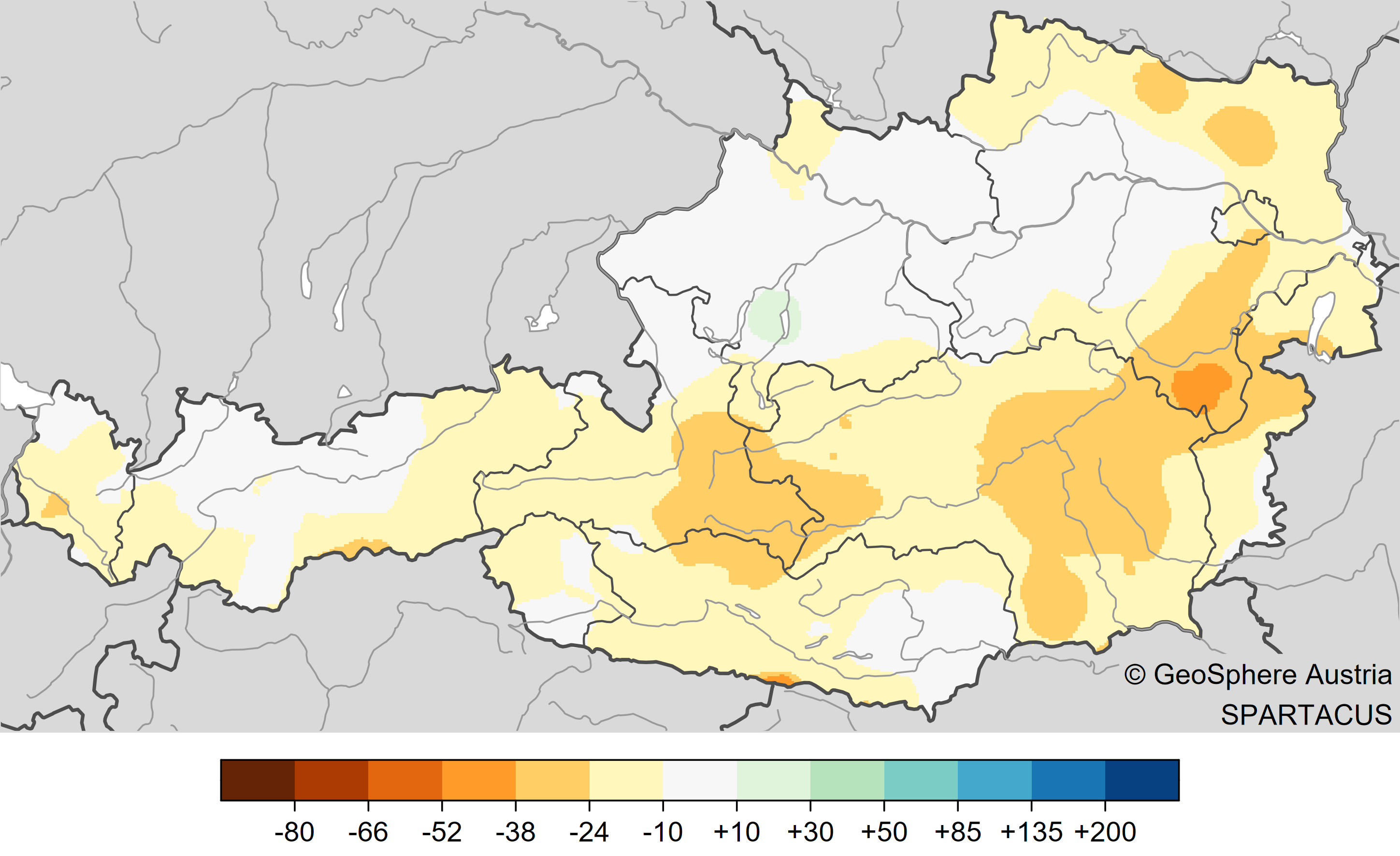
‘The extreme lack of rainfall does not just date back to the last few months. Autumn 2026 is now the eighth consecutive season with a negative rainfall balance,’ emphasises Orlik. The drought in Austria is therefore continuing. Nationwide, the rainfall deficit stood at 30 per cent in September, 39 per cent in October and 27 per cent in November. In Upper Carinthia, the Lungau region and large parts of Upper Styria, the deficit reached up to 50 per cent. In Mürzzuschlag (ST), it stood at minus 58 per cent. The driest place in autumn 2026 was Retz (Lower Austria) with 66 millimetres of rainfall (minus 42 per cent).
Autumn2026_precipitation_1961-1990.png
Precipitation trends in autumn 2026 compared with the 1961–1990 long-term average © GeoSphere Austria.
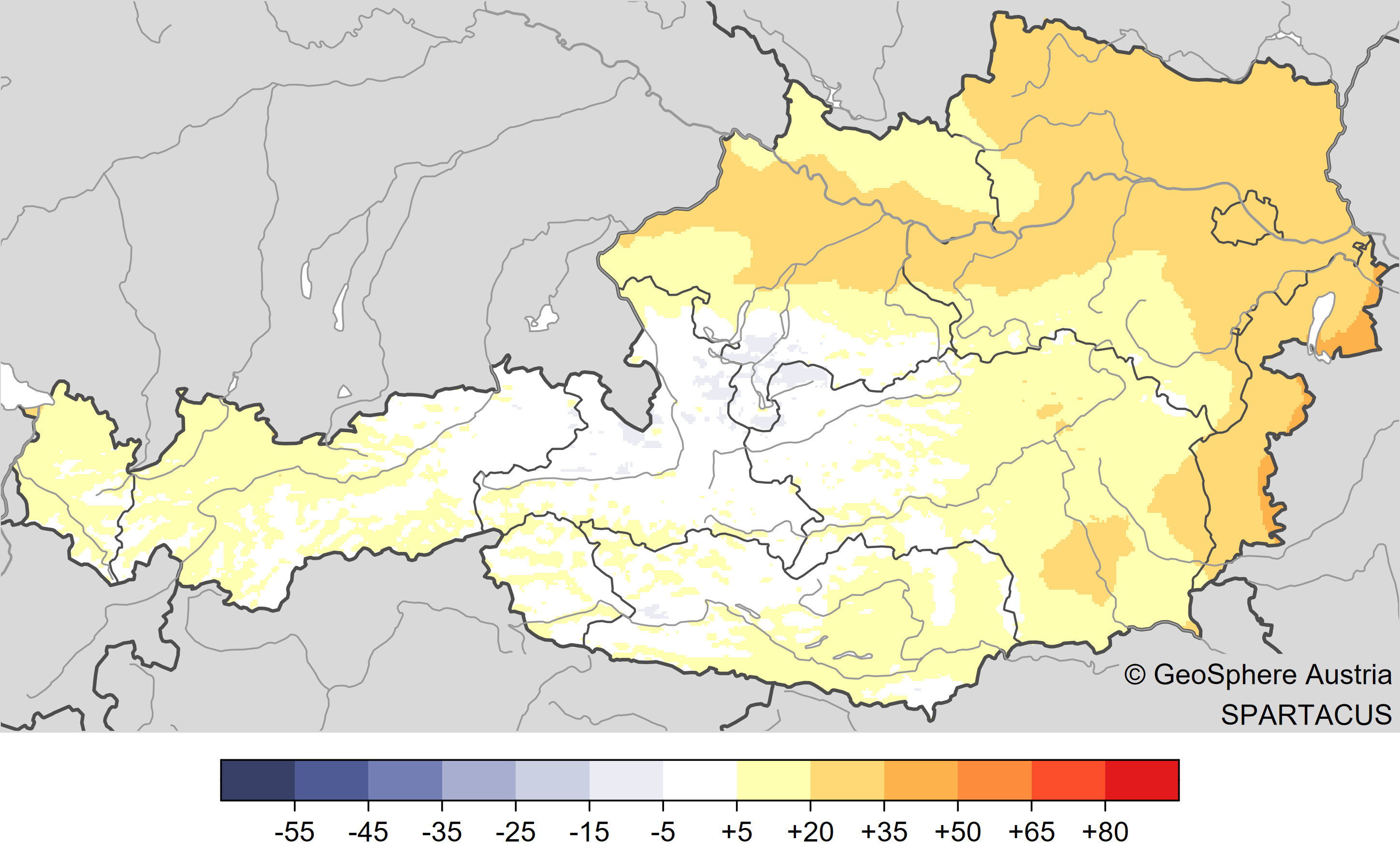
The fact that autumn 2026 was above-average in terms of sunshine is mainly down to September, which saw a 28 per cent increase. October also saw plenty of sunshine, with a 17 per cent increase on the long-term average. November finally turned cloudy, with the sun making only rare appearances – a 15 per cent decrease. The sunniest areas were north of the Alps in the Danube region of Lower and Upper Austria, as well as in Vienna and northern Burgenland, with an increase in sunshine of up to 35 per cent. The sunniest place in Austria in autumn 2026 was Andau (B) with 523 hours of sunshine.
Autumn2026_sun_1961-1990.png
Trends in sunshine duration in autumn 2026 compared with the long-term average from 1961 to 1990. © GeoSphere Austria.
Autumn2026_Temp_lowlands_1961-1990_ab1767.png
Temperature trends in the lowlands for autumn 2026 compared with data since 1767: The figure shows above-average warm (red) and cold (blue) summers since 1767 compared with the 1961–1990 climate reference period, based on GeoSphere Austria HISTALP data for the lowlands. The smoothed trend line is shown in black. © GeoSphere Austria.
Translated with DeepL.com (free version)